Falls Dam: creating a legacy for the Manuherikia catchment and communities

Aimee Wilson
03 March 2026, 5:00 PM
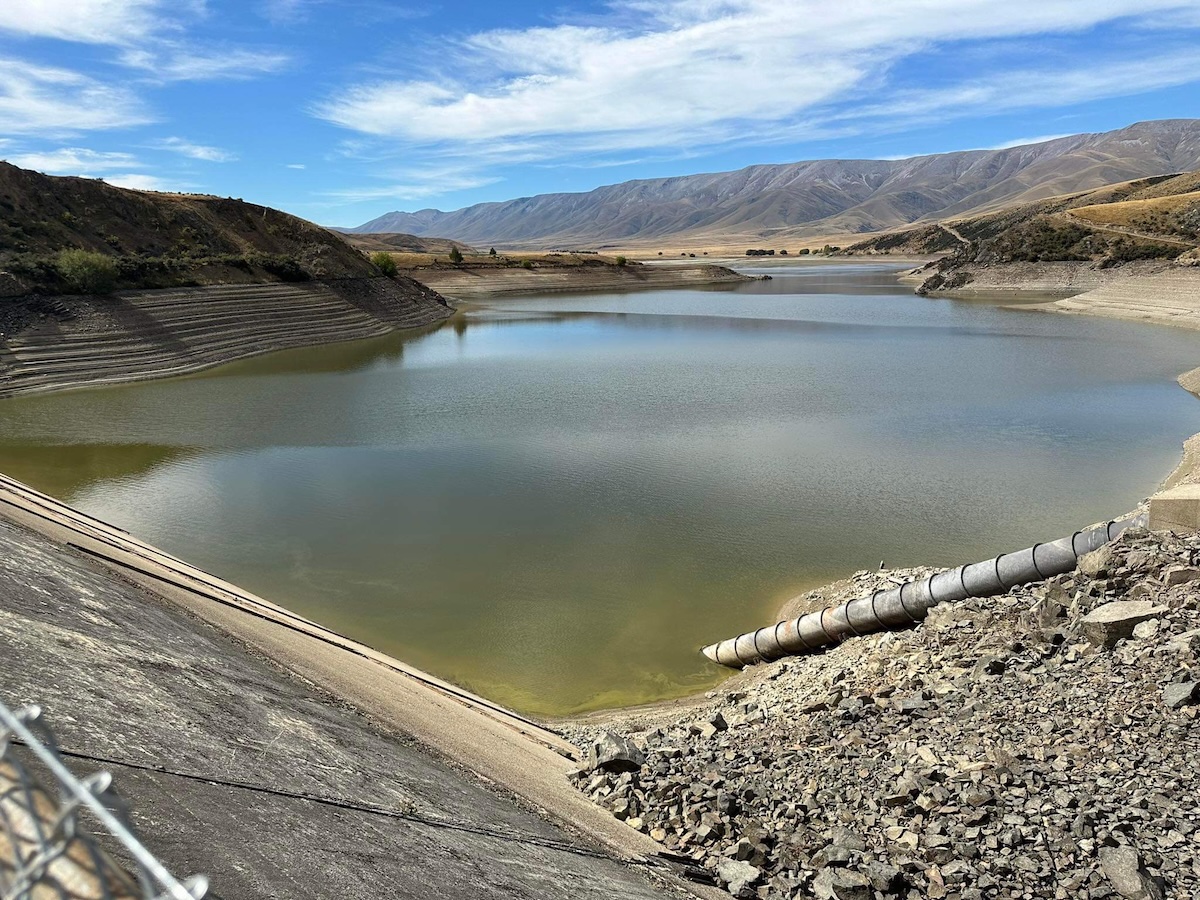 Plans are underway to reconstruct a new dam in front of the existing 34m Falls Dam within two to four years. Image: file
The new Falls Dam near Naseby has been described as an ‘insurance policy’ for drought, but having better storage capacity doesn’t mean there will be more water.
As Manuherikia River Ltd (MRL) chair Jeff Grant points out, the new dam will allow better use of the water and in a more efficient way.
The Government announced two weeks ago it is investing in the future resilience of Central Otago’s primary industries with a $2 million Regional Infrastructure Fund (RIF) loan to support pre‑construction work on the replacement dam.
The 90-year-old dam supports around 8000ha of productive land in the catchment, is near the end of its life, and failing to deliver enough water during dry years.
The design work was already carried out in 2014, but now the Damwatch team from Christchurch has been commissioned to see if that model is still fit for purpose - 12 years on.
Jeff said the likely cost of a new dam will be in the range of $120 million to $150 million, depending on whether it will built 6m or 9m higher than the existing 34m one.
Following the Damwatch review, due to be completed in April, MRL will then contract a quantity surveying company to carry out the finer details and costings - dams need a contingency of 25%, because there are so many unknowns.
“So there’s quite a margin around that, because we don’t know, is the rock face what they thought it would be? Does the dam face need to be 4m or 6m?" he said.
One of MRL’s directors John Wright has been involved in other dam projects, and most of the experts are South Island based.
“Clyde was the last big one but there have been several smaller ones since," Jeff said.
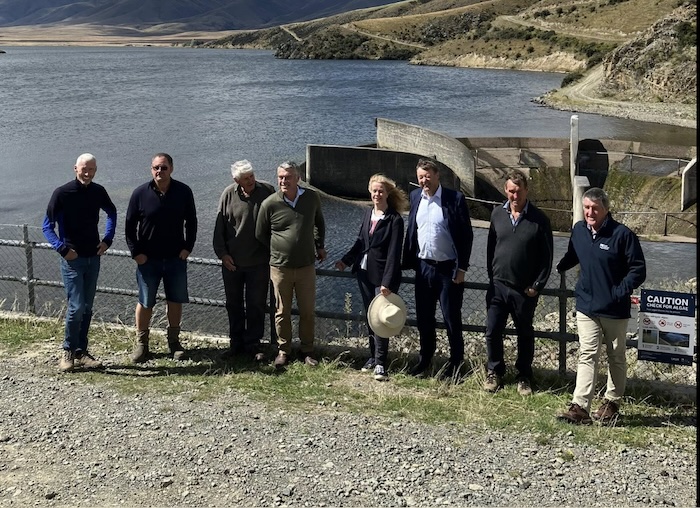
Otago Regional councillors, Minister for Rural Industries Mark Patterson and Manuherikia catchment representatives at Falls Dam following the recent announcement. Image: supplied
Jeff said dams cost money and that forces the water charges to go up with construction, because of the capital costs.
The resource management process will be extensive and it's under Government review so there are many unknowns.
But what MRL does know is that between 10-12 consents will be needed before work can start, including for building, discharge and a land use consent from DOC.
And then there are the minimum flow rates to consider from the Otago Regional Council, that have been widely debated for years - the irrigators wanting the rate to remain low so allocations are not affected; the recreational anglers and conservationists fighting to keep levels high to protect the health of the Manuherikia river.
“But we don’t want to get ourselves in a position that the minimum flow gets so high that all of the existing water we are able to gain… just suddenly disappears," Jeff said.
He said building a new dam will allow them to moderate the flow better, with one option being to allow the Manuherikia River to have a variable rate.
“They are all solvable problems and I think we will get there eventually.”
MRL is hoping to start building the new dam by the end of 2027, but realistically it will be mid-2028. Jeff said because it’s being built for another 100 years, “it’s important we don’t get it wrong."
The new dam will allow consistency of water to irrigators between November and January over the driest summer months, and then the restrictions will be put in place.
While the main driver of the new dam is to increase reliability, eventually there will be other opportunities opened up for new users as well.
Working with the Central Otago District Council, MRL is looking at finding a solution for a reliable domestic water supply for both Ōmakau and Ophir, and eventually stock water as well.
The dam might service a further 2000ha of land within a few years, and then supply another 2000ha five years later - but it will be a gradual process.
“Intensification doesn’t take up a lot of hectares. We might see 6-10% change in the land mass within 10 years.”
Farmers only irrigate between 5% and 10% of their land, but horticulture and viticulture, which currently makes up 500ha of the catchment, requires more water for frost fighting and growing trees and fruit.
“Will we see new land use? We might see little pockets here and there,” he said, but most probably closer to Alexandra on the edge of town like the existing orchards and vineyards.
Jeff said the main issue is that the existing Falls Dam needs replaced, because eventually it may not get an engineer’s certificate.
“It’s not just about how a community survives for another 50 to 100 years, it’s building a great legacy.”
Have a story to share or comment to make? Contact editor@centralapp.nz
NEWS
WHAT'S ON


JOBS