Central in an object: The ‘Cock of the River’ trophy

Staff Reporter
28 December 2025, 4:08 PM
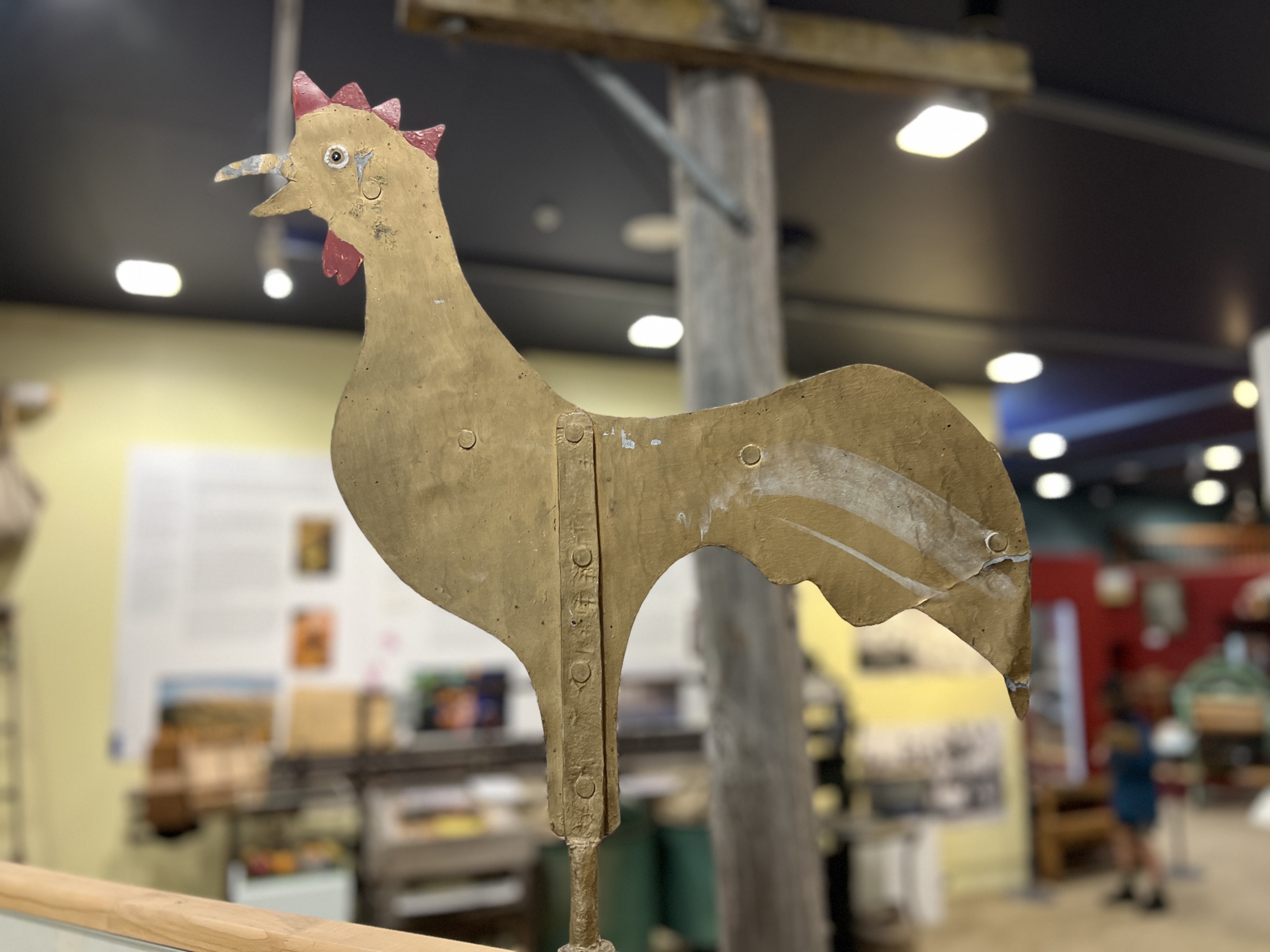 The ‘Cock of the River’ trophy on display in Alexandra’s museum. Image: The Central App
Welcome to 'Central in an object', our summer series celebrating the rich history of the Central Otago district.
We asked museum curators and volunteers across the region to strip it back to basics: choose just one item from their collections that tells a story about who we are.
Today, Central Stories Museum and Art Gallery operations manager Paula Stephenson tells us about the ‘Cock of the River’ trophy.
The object
To the untrained eye, it looks like a simple metal cutout of a rooster.
For a time there, even Paula Stephenson admits she didn’t realise its cultural weight - until a member of the public walked into the museum specifically asking if the "trophy" still existed.
After a bit of digging into its history, the metal rooster was moved to pride of place.
It wasn't just a cutout; it was the "Cock of the River", a coveted floating trophy awarded to the gold dredge with the highest returns, symbolising supremacy in Central Otago’s fiercely competitive dredging industry.
At the peak of the gold rush, more than 200 dredges worked the waters of Central Otago.
Being crowned the "Cock of the River" was a prestigious honour, reflecting both skill and luck in the pursuit of gold.
The specific trophy held at Central Stories was permanently awarded to the Manuherikia dredge in February 1907.
That month, the crew extracted an impressive 445 ounces of gold from the Clutha River near the Alexandra Bridge.
Upon the conclusion of operations, the trophy was given to crew member Charles Theyers, who later donated it to the museum.
The trophy has seen its fair share of drama on the river.
One famous holder was the Hartley and Reilly dredge, which won the trophy on August 18, 1899, after a record-breaking week of 1,187 ounces.
Legend has it the success began when the winch hand on the midnight shift fell asleep while drunk. The buckets continued to rotate in one spot, digging through the "false bottom" to hit a rich lode of gold beneath.
The competition was not always friendly.
On July 7, 1900, the Lady Ranfurly dredge set a new record of 1,234 ounces in just 128 hours. However, when the crew went to collect the trophy from the current holders, Hartley and Reilly, the rival crew refused to hand it over because their dredge master wasn't present.
The dispute was eventually rectified, and the Lady Ranfurly held the crown until 1904.